
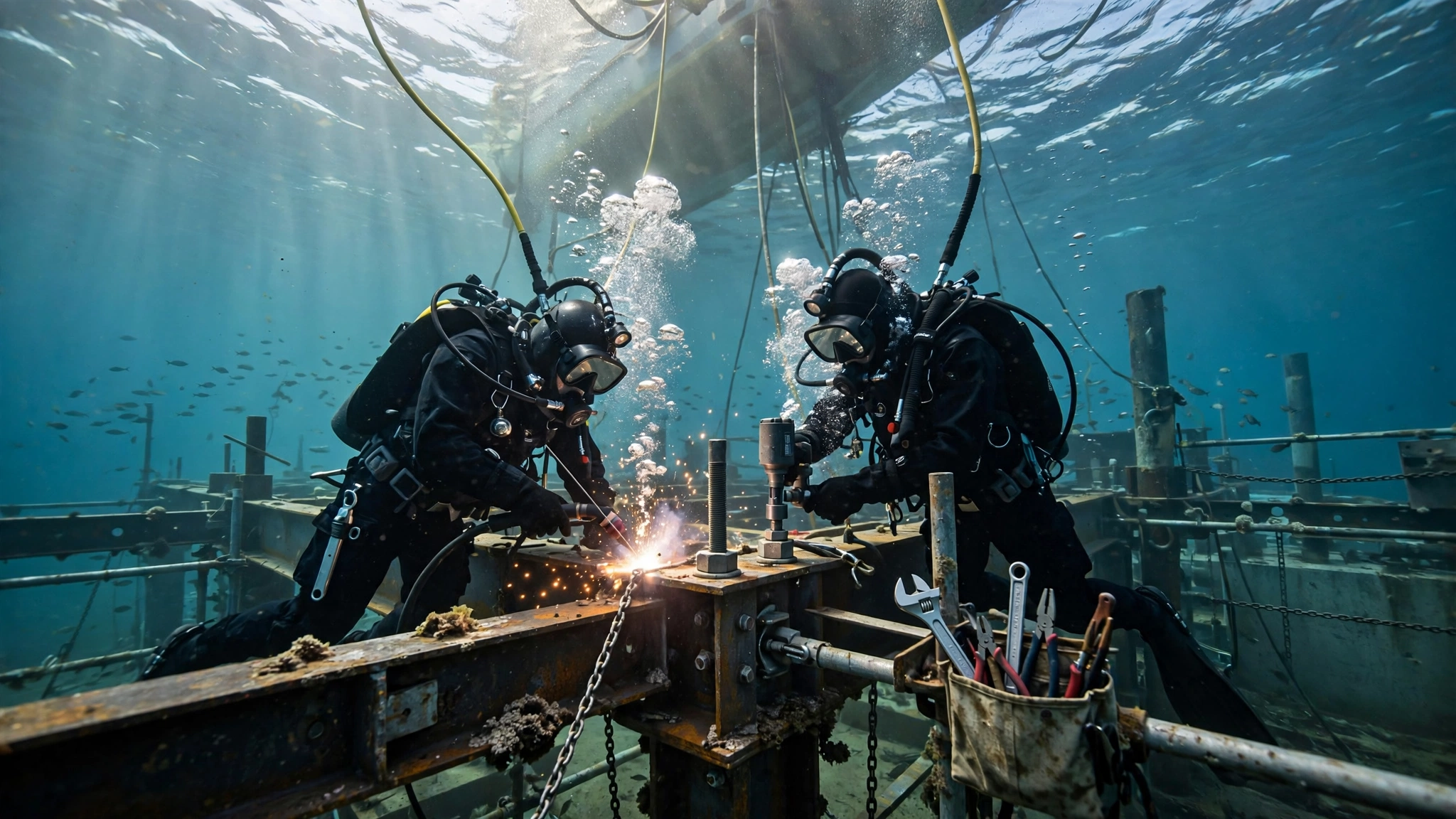
Underwater construction presents challenges that do not exist on a typical building site. Limited visibility, water pressure, currents, restricted access, and the need for specialized equipment can make even routine construction activities more complicated. Professional diving services provide the skilled underwater workforce needed to inspect, prepare, install, repair, and maintain structures below the waterline.
From bridge foundations and harbor facilities to pipelines and marine infrastructure, commercial divers often work alongside engineers, contractors, crane operators, and surface support teams. Their role is not simply to perform work underwater. They also help project teams understand actual site conditions and complete tasks that cannot easily be handled from the surface.
Professional diving services cover a wide range of underwater activities. The exact work depends on the project, water conditions, depth, structure, and construction method.
Before physical construction begins, divers may inspect the work area, examine existing structures, identify obstructions, or document underwater conditions. During construction, they can assist with positioning components, checking connections, operating underwater tools, and confirming that installed materials are where they are intended to be.
Divers may also return after construction for inspections, maintenance, or repairs. This makes commercial diving relevant throughout several stages of a marine construction project rather than only during installation.
A contractor needs a clear understanding of the underwater environment before starting work. Drawings, sonar data, and previous surveys can provide valuable information, but certain conditions may require direct examination.
Commercial divers can visually inspect submerged foundations, seawalls, piles, pipelines, intake structures, and other infrastructure. Depending on the project, they may document corrosion, cracking, displaced components, debris, marine growth, or other conditions that could affect planned work.
When visibility allows, underwater photography and video can provide additional documentation for engineers and project managers. Measurements and observations collected underwater can also help teams compare actual site conditions with construction plans.
Underwater construction sometimes requires cleaning or clearing before installation can begin. Divers may remove marine growth, sediment, loose material, or debris from specific work surfaces.
Surface preparation can be especially important when repairs, coatings, mechanical connections, or other materials must be applied to an existing structure. A properly prepared area gives the construction team a clearer surface to inspect and work with.
Many construction components are lowered into the water using cranes or other lifting equipment. Once submerged, however, surface crews may have limited ability to see the final position of the component.
Professional divers can guide, inspect, and assist with these underwater installation activities.
For example, divers may support work involving:
Pipes and underwater utility components
Structural supports and piles
Marine construction hardware
Valves and fittings
Concrete elements
Cables and associated components
Temporary construction equipment
Communication between the diver and surface team is important during these operations. The diver can report alignment, obstructions, connection points, and other conditions that may not be visible from above.
Existing marine structures eventually may require repair because of deterioration, impact damage, erosion, environmental exposure, or changing site conditions. Some repairs can be completed without fully dewatering the work area.
Divers may help clean damaged sections, examine exposed surfaces, position repair materials, install forms, or assist with underwater concrete work. They can also inspect completed repairs to identify visible gaps, movement, or other concerns that require further evaluation.
The appropriate repair technique depends on the structure and the nature of the damage. A repair method suitable for a seawall, for example, may not be appropriate for a bridge pier or submerged pipeline support. Engineering requirements therefore remain central to the repair process.
Inspection is not limited to the beginning or end of a project. Underwater conditions can change as construction progresses, and installed components may need to be checked before the next stage starts.
Divers can examine alignment, fastening points, joints, weld areas, concrete surfaces, and the general condition of submerged components. They may also provide photographs or video so engineers and contractors can review areas that are otherwise inaccessible.
This can help identify installation issues before additional construction makes the area more difficult to reach.
Commercial divers may use tools designed or adapted for underwater work. Depending on the job, these can include hydraulic or pneumatic tools, cutting equipment, cleaning systems, measuring devices, cameras, lighting, and communication equipment.
Tool selection depends heavily on the environment. Equipment that works effectively in shallow, calm water may not be appropriate where currents, poor visibility, depth, or restricted access create additional challenges.
Divers must also coordinate their movements with surface operations. Construction equipment, lifting activities, hoses, cables, and other underwater obstacles can affect how a task is approached.
An underwater construction operation depends on more than the person in the water. Surface personnel support communication, equipment management, diving operations, and coordination with the wider construction team.
Clear communication is particularly important when divers work near cranes, vessels, heavy components, or operating machinery. Surface teams need to understand what the diver is doing, while the diver needs timely information about activities occurring above and around the work area.
Planning also needs to account for water conditions, access points, vessel traffic, weather, equipment requirements, and emergency procedures appropriate to the project.
Professional diving services expand what construction teams can accomplish below the waterline, but diving does not remove the challenges of the underwater environment.
Poor visibility may make detailed visual work difficult. Currents can restrict movement or affect equipment. Depth influences diving procedures, while confined spaces and underwater obstructions can complicate access. Weather and surface conditions may also affect when certain operations can safely proceed.
For this reason, underwater work should be planned around actual site conditions rather than assuming the same approach will work for every project.
Professional diving services provide the direct underwater access needed for many marine and civil construction activities. Divers can inspect existing conditions, prepare work areas, assist with installation, support structural repairs, operate specialized tools, and document completed work.
Their contribution is most effective when diving operations are integrated with engineering, construction planning, lifting activities, and surface support. Careful coordination allows underwater construction teams to address conditions that cannot be managed effectively from above while maintaining clear communication throughout the project.
The sky was cloudless and of a deep dark blue.
Our mission is to deliver innovative, reliable, and sustainable construction solutions that bring our clients’ visions to life.